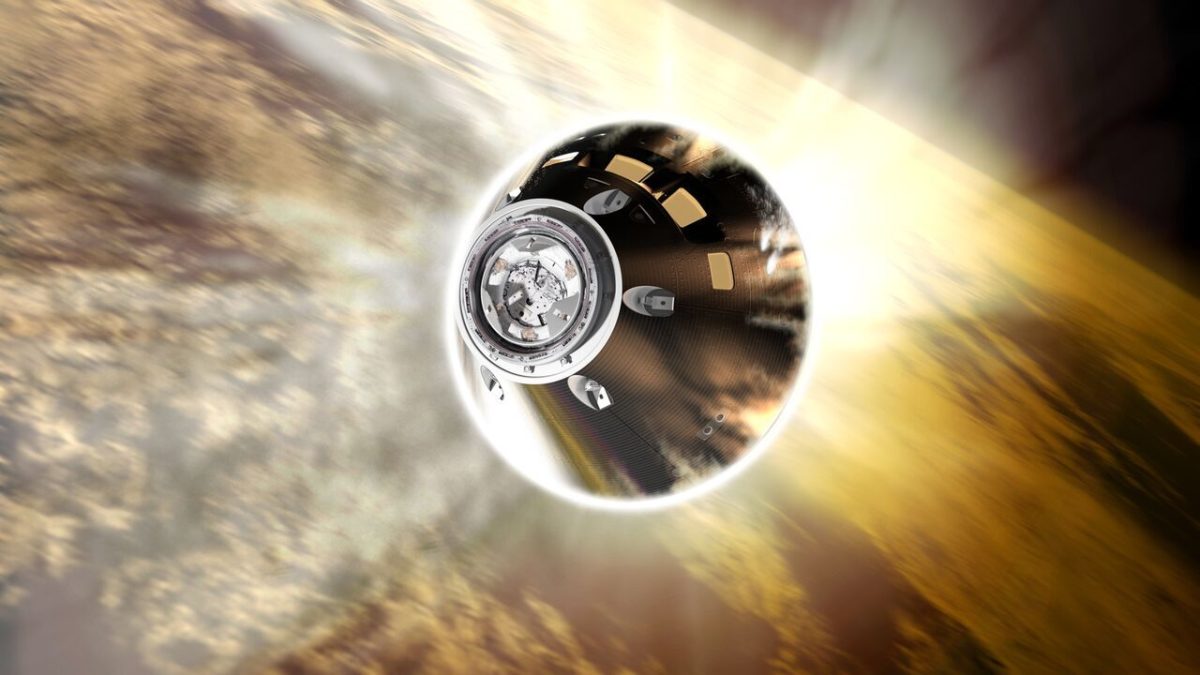
The success of NASA’s Artemis II mission, the first crewed lunar flight in over 50 years, depends on a final, high-stakes test of the Orion spacecraft’s heat shield during atmospheric reentry. This test, scheduled for the mission’s conclusion in late 2025, will see the capsule carrying four astronauts reenter Earth’s atmosphere at approximately 24,500 miles per hour, or 32 times the speed of sound. The outcome is pivotal for the future of NASA’s broader lunar exploration program, as historical failures during reentry have led to the cancellation of entire space initiatives.
The Artemis II mission will send NASA astronauts Reid Wiseman, Victor Glover, and Christina Koch, along with Canadian Space Agency astronaut Jeremy Hansen, on a approximately 10-day journey around the Moon and back. While the mission will test numerous systems, from life support to deep space navigation, the final minutes of the flight present one of its most severe technical challenges.
Historical Precedent and Technical Challenge
The reentry phase represents a period of extreme risk in any spaceflight. The spacecraft must withstand temperatures nearing 5,000 degrees Fahrenheit as it plunges through the atmosphere. A failure of the heat shield or any critical system during this phase can be catastrophic. NASA officials have frequently cited the critical nature of this test for the Orion spacecraft’s design validation.
Previous space programs underscore the consequences of reentry failure. Technical and safety issues during development and testing have historically led to program reassessments and, in some cases, cancellations. The Artemis program’s forward trajectory is therefore closely tied to demonstrating a safe and successful return for the crew.
The Orion Spacecraft’s Return Profile
Following its lunar flyby, the Orion capsule will begin its return to Earth. The reentry will not be a straight descent. To manage the immense energy from its lunar return speed, Orion will perform a “skip reentry” maneuver. This technique involves the capsule briefly dipping into the upper atmosphere, skipping back out like a stone on water, and then making its final descent.
This maneuver reduces G-forces on the crew and allows for more precise landing targeting in the Pacific Ocean off the coast of California. The primary component protecting the spacecraft during this ordeal is its heat shield, a ablative covering designed to char and erode away, carrying intense heat with it.
Verification of Flight Readiness
The Artemis I mission, an uncrewed test flight completed in December 2022, provided initial data on the heat shield’s performance. While the shield performed its primary function, post-flight analysis revealed unexpected and uneven erosion of the material. NASA engineers have since conducted a thorough investigation and implemented modifications to the heat shield’s construction and bonding processes.
The Artemis II flight is the essential verification test for these modifications under actual crewed mission conditions. Data from its reentry will be scrutinized to certify the system for future, longer-duration Artemis missions, including those aimed at landing astronauts on the lunar surface.
Program Implications
A successful reentry and splashdown for Artemis II will validate the core transportation system for NASA’s lunar ambitions. It would clear a major hurdle for Artemis III, the mission planned to land astronauts near the lunar South Pole. Conversely, significant anomalies could lead to delays as engineers address new technical challenges.
The agency has emphasized that crew safety is the paramount concern for all mission phases. The reentry test is the final and most dynamic demonstration of the vehicle’s ability to protect its occupants at the end of a deep space journey.
NASA and its international partners are proceeding with other Artemis program elements, including development of the lunar Gateway station and new lunar landers. However, the continued pace and scale of these efforts are contingent on the proven success of the Orion spacecraft’s complete mission profile, from launch to recovery.
The next major milestone is the final assembly and integration of the Artemis II spacecraft modules with the Space Launch System rocket. Following this, a series of integrated tests will be conducted ahead of the targeted launch period. Official mission timelines remain dependent on the resolution of all outstanding technical items, with the reentry phase standing as the ultimate test of the vehicle’s return capability.