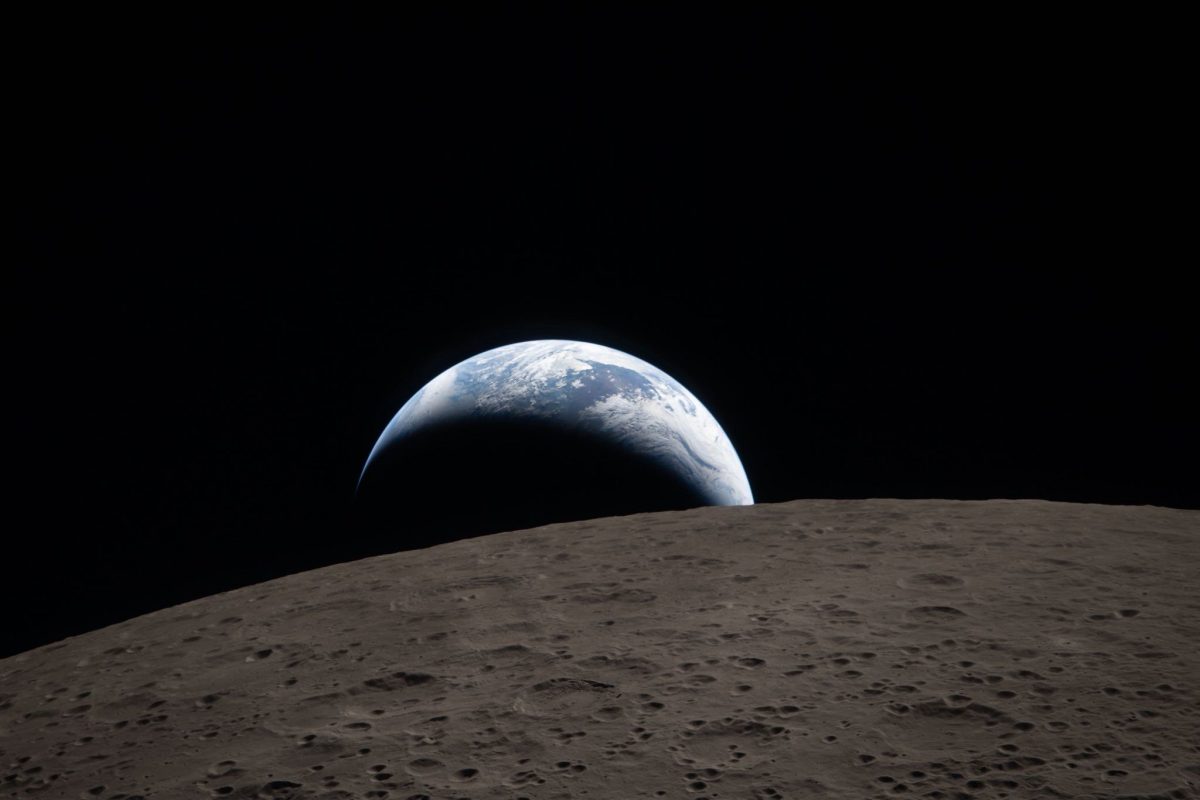
NASA’s Artemis II mission has transmitted its first images of the lunar surface, captured from approximately 7,000 kilometers away. The images, released this week, offer a detailed view of the moon’s far side and demonstrate the operational readiness of the spacecraft’s systems. This successful data transmission marks a critical milestone for the mission, which aims to return humans to the lunar vicinity for the first time in over fifty years.
The photographs provide a clear perspective of the lunar terrain, including craters and geological features rarely seen from such a close distance by a crew-rated spacecraft. The images were taken by cameras onboard the Orion spacecraft during its outbound journey. NASA officials confirmed the clarity and quality of the images validate the performance of the spacecraft’s communication and imaging systems in deep space.
Mission Background and Objectives
Artemis II is the first crewed mission of NASA’s Artemis program. Its primary objective is to test all systems aboard the Orion spacecraft with astronauts on board during a lunar flyby. The mission will not land on the moon but will travel around it before returning to Earth. The data gathered, including these initial images, is essential for verifying the spacecraft’s capabilities ahead of future landing missions.
The crew for Artemis II was announced earlier this year and consists of four astronauts. They are scheduled to launch atop NASA’s Space Launch System (SLS) rocket. The mission duration is planned for approximately ten days, looping around the moon before splashing down in the Pacific Ocean.
Significance of the Far Side Imagery
The moon’s far side, often incorrectly called the “dark side,” is the hemisphere that permanently faces away from Earth due to tidal locking. It has a distinctly different appearance from the familiar near side, with a thicker crust and more cratered highlands. Previous uncrewed missions, such as those from China and earlier NASA orbiters, have mapped this region, but these new images represent a fresh perspective from a human exploration vehicle.
Analysis of these images will contribute to the selection of future landing sites for the Artemis program, which aims to establish a sustainable human presence on the moon. Scientists will study the topography to better understand the moon’s history and composition.
Verification of Mission Readiness
The successful capture and transmission of these high-resolution images confirm that the spacecraft’s optical systems and deep space communication network are functioning as intended. This is a key test for mission controllers, as reliable communication is vital for crew safety and mission success. The images also serve as a practical check of the spacecraft’s navigation and pointing systems.
NASA has stated that all core systems on the Orion spacecraft have performed nominally since launch. The release of these images is part of a series of planned checkpoints to publicly demonstrate mission progress and technological capability.
Global Context and International Interest
The Artemis program is part of an international effort to explore the moon, involving partnerships with space agencies from Europe, Canada, and Japan. The program’s progress is closely watched by the global scientific and aerospace communities. The successful return of humans to the moon’s vicinity is seen as a stepping stone for more ambitious goals, including missions to Mars.
Other nations, including China and India, have active lunar exploration programs, highlighting renewed global interest in Earth’s natural satellite. The data from Artemis II is expected to be shared with international partners and the broader scientific community.
Following the completion of the Artemis II mission, NASA plans to proceed with Artemis III, which is intended to land astronauts near the lunar south pole. The timeline for Artemis III is dependent on the outcomes of Artemis II and the development of supporting infrastructure, including a lunar lander and new spacesuits. NASA’s current schedule, subject to technical and budgetary reviews, aims for a crewed landing no earlier than 2026.