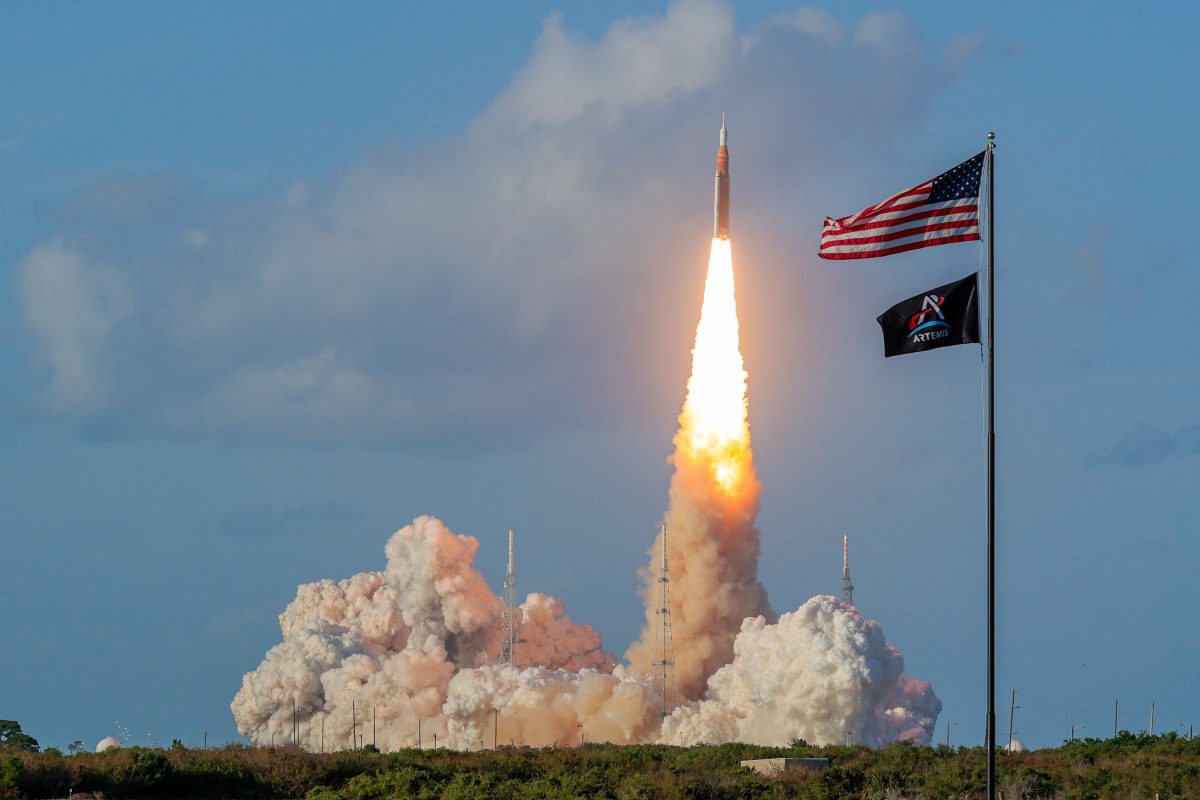
NASA’s Artemis II mission will carry a crew of four astronauts on a trajectory that will take them approximately 10,300 kilometers beyond the far side of the Moon. This flight, scheduled for no earlier than September 2025, will establish a new record for the farthest distance from Earth humans have ever traveled. The mission represents a critical test of the Orion spacecraft’s systems in deep space ahead of planned lunar landings.
The chosen flight path, a hybrid free-return trajectory, is the result of extensive engineering analysis by NASA and its international partners. Mission planners at Johnson Space Center evaluated multiple potential routes to balance crew safety, mission objectives, and spacecraft capabilities.
Engineering a Path Through Deep Space
The trajectory selection process involved complex calculations of orbital mechanics, fuel requirements, and abort scenarios. Engineers prioritized a path that would ensure the spacecraft could return to Earth safely using minimal propulsion in the event of a system failure. This requirement is a cornerstone of crewed mission design.
The route leverages gravitational forces from both the Earth and the Moon. After launch on the Space Launch System (SLS) rocket, the Orion spacecraft will perform a translunar injection burn. It will then travel to the Moon, using lunar gravity to slingshot into a high-altitude orbit around the Earth.
This distant retrograde orbit will carry the crew to the record-setting distance. The orbit is considered stable, reducing the need for constant thruster firings to maintain position and conserving vital fuel and resources.
Balancing Objectives and Constraints
Key factors in selecting the final trajectory included communication coverage, thermal conditions, and radiation exposure. The mission must maintain reliable communication links with ground controllers on Earth, even when the spacecraft is behind the Moon.
Thermal engineers modeled the spacecraft’s exposure to sunlight and deep space cold throughout the journey. The trajectory must keep Orion within its designed thermal limits to protect both crew and equipment. Similarly, radiation experts assessed the path to minimize the crew’s exposure to deep space radiation beyond Earth’s protective magnetosphere.
The chosen route also provides favorable conditions for testing key systems. These include Orion’s life support, navigation, and communication systems in the deep space environment, which differs significantly from low-Earth orbit.
Historical Context and Future Implications
The Artemis II distance of roughly 10,300 kilometers beyond the Moon will surpass the record set by the Apollo 13 mission in 1970. That mission’s crew reached approximately 400 kilometers from the lunar far side, or about 400,171 kilometers from Earth, during its emergency return.
The successful demonstration of this trajectory is essential for NASA’s Artemis program. It validates the operational concepts for delivering astronauts to the lunar vicinity and returning them safely. The data gathered will directly inform the planning for Artemis III, the mission intended to land astronauts near the lunar South Pole.
Following the Artemis II mission, NASA and its partners, including the Canadian Space Agency, the European Space Agency, and JAXA (Japan Aerospace Exploration Agency), will analyze all flight data. The focus will be on spacecraft performance and crew health metrics during the deep space transit.
The next major milestone is the readiness review for the Artemis III mission hardware, including the human landing system. NASA officials have stated that the timeline for the first crewed lunar landing in over 50 years depends heavily on the outcomes and lessons learned from the Artemis II flight.